How to Layer a Bra Top When It Gets Cold (Without Losing the Point)
Quick Answer: A bra top works in cooler weather when it is treated as a base layer with a visible sliver rather than as the focal point. The three combinations that work: under an open shirt with high-waisted bottoms, under a low-cut knit or blazer, and under a sheer or mesh long-sleeve. The key measurement is the gap - about 5-10cm of visible skin or bra top reads intentional; more reads summer.
Most people buy bra tops in May and stop wearing them in September, which means they get four months of use out of a piece that could work for eight. The adjustment is layering, and the layering has rules.
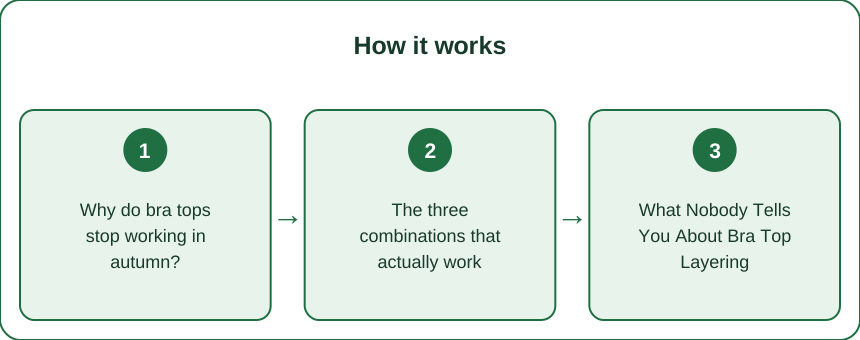
Why do bra tops stop working in autumn?
It is not really the temperature. It is proportion and context.
A bra top alone reads as either activewear or eveningwear. In summer, bare skin is the ambient default and it reads as neither - it just reads as summer. Once everyone else has sleeves on, the same top becomes conspicuous.
The visible skin ratio is what changes. In July, an outfit that is 40% bare skin looks normal. In October it looks like you have got the day wrong. The fix is not covering the bra top entirely - it is reducing the ratio while keeping it visible.
Temperature is a real but secondary factor. A bra top under a layer is warm enough for most autumn days. The reason people stop wearing them is more often that the outfit stops looking right than that they are cold.
The high-waisted bottom is the single most important variable. A bra top with a low-rise bottom exposes the entire midriff, which is a summer proportion. The same bra top with a high-waisted trouser or skirt shows a narrow band, which works year-round.
What this means practically: the transitional version of every bra top outfit involves raising the waistline and adding one layer above. Those two changes carry the piece through to November.
The three combinations that actually work
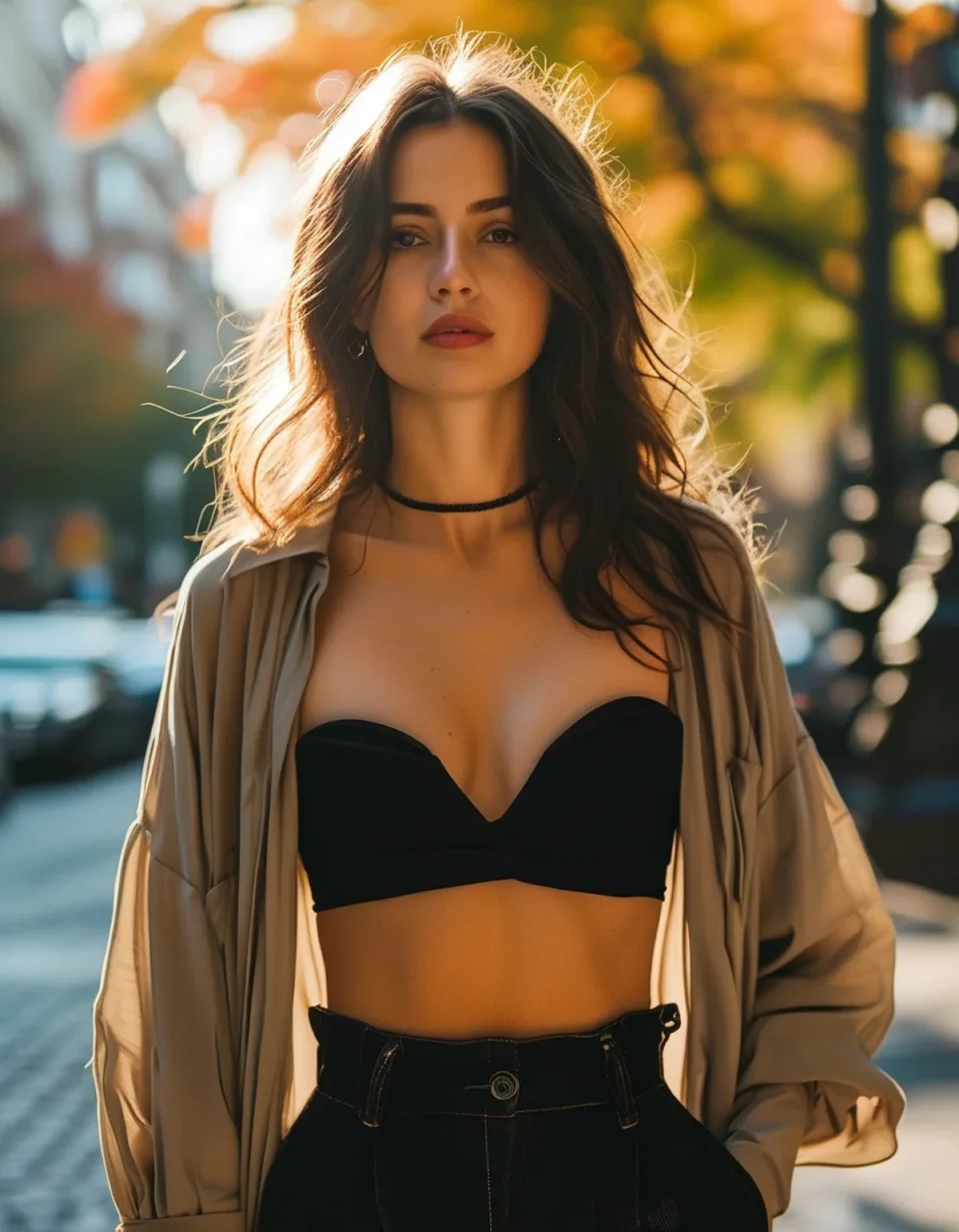
1. Under an open shirt with high-waisted bottoms.
The most versatile and the easiest. An oversized poplin, oxford, or lightweight denim shirt worn fully open, bra top underneath, high-waisted trousers or a midi skirt.
Why it works: the shirt provides vertical lines on either side that frame rather than cover, the visible band of bra top is narrow, and the shirt can be closed if you get cold or the context changes.
The detail that matters: the shirt should be long enough to reach mid-hip. A cropped open shirt over a bra top is all horizontal lines and reads unbalanced.
2. Under a low-cut knit or a blazer.
A V-neck or scoop-neck knit with the bra top visible at the neckline, or a blazer worn with nothing between it and the bra top.
Why it works: you are covered everywhere except a small deliberate window. It reads as a styling decision rather than an omission.
Blazer version specifics: this is the evening-out version. A structured blazer, a bra top in a fabric with some substance - ribbed, satin, or a knit rather than a technical sports fabric - and a high-waisted trouser.
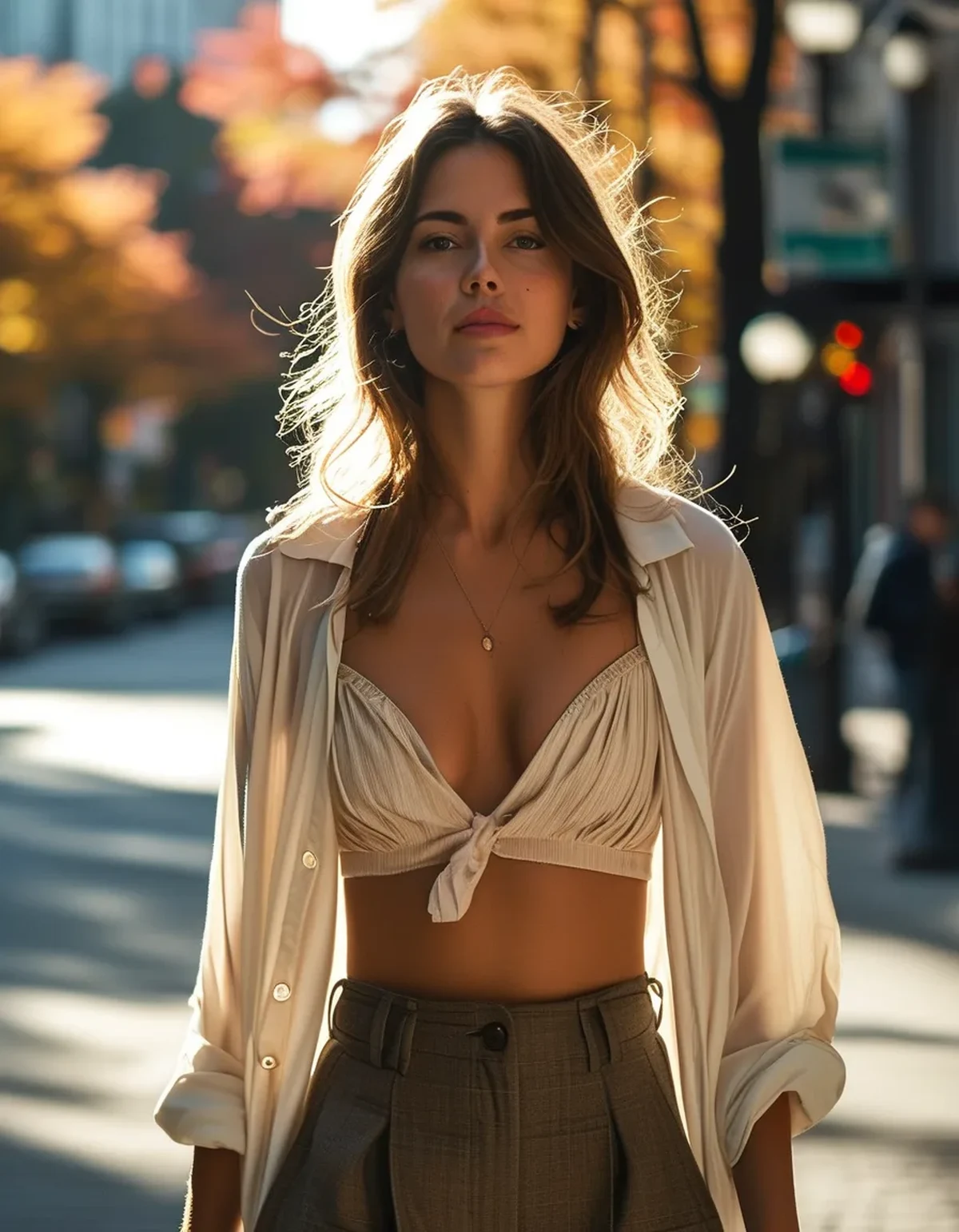
3. Under a sheer or mesh long-sleeve.
A fine mesh, sheer knit, or lightweight long-sleeve worn over the bra top, so the bra top reads as intentional underwear-as-outerwear rather than as a top that needs covering.
Why it works in autumn specifically: it gives full coverage of the arms, which is what actually gets cold, while the fabric keeps the outfit from reading heavy.
The fabric matching detail: a technical sports bra top under a sheer knit reads mismatched. A ribbed or seamless bra top in a similar tone reads considered.
What Nobody Tells You About Bra Top Layering
Fabric weight has to match, and this is the most common error. A thick chunky knit over a thin technical bra top creates a visual mismatch that reads like you were interrupted mid-change. Match substantial with substantial, fine with fine.
The band is the part people see. In a layered outfit, the underband of the bra top is frequently the most visible element. A worn, rolled, or logo-heavy band undermines everything above it, and a clean flat one costs the same.
Straps matter more layered than unlayered. Under an open shirt, the straps are on display at shoulder level, framed by the shirt. Thin, clean straps read like a garment; thick padded athletic straps read like a sports bra that ended up in the wrong outfit.
Colour matching is more forgiving than you would expect. A bra top that contrasts deliberately - black under cream, white under navy - reads more intentional than one that almost matches. The near-match is what looks accidental.
Cropped is not automatically better here. A slightly longer bra top - one that reaches just below the ribcage - is far easier to layer, because it reduces the visible skin band automatically and stays put when you move.
The seated test. Most bra top outfits are checked standing in front of a mirror. Sit down and look again. A high-waisted trouser that gaps when seated changes the whole proportion, and it is where these outfits most often fail in practice.
What to look for when buying one for layering
Layering makes different demands than wearing one alone, and the pieces that work best are usually not the ones marketed for it.
Fabric with body. Ribbed knit, scuba, a heavier seamless, or satin. Thin technical jersey works under nothing and looks flimsy under anything.
A clean, flat underband. No visible logo, no thick elastic, no contrast piping. This is the most-seen part in a layered outfit.
Straps you would be happy to show. Adjustable is useful; thin and flat is better than thick and padded for layering purposes.
Length just below the bust or slightly longer. Very short styles show more midriff, which is what you are trying to reduce.
Neutral colours first. Black, cream, chocolate, and grey all layer under everything. A bright bra top constrains what can go over it.
Support, honestly assessed. A bra top worn as a top still needs to do a bra’s job, and many are cut for aesthetics rather than support. If you are wearing it all day, this matters more than any styling consideration. Getting properly measured is worth doing - most people are wearing the wrong size and have been for years.
One test in the changing room: raise both arms above your head. If the band rides up and stays up, it will do the same thing all day, and no layering fixes that.
How far into autumn can this actually go?
Further than most people assume, and the limiting factor is not what you would guess.
Through September and October the three combinations above work in most temperate climates without modification. A bra top under an open shirt with a jacket over the top is comfortable well into the low teens Celsius.
Into November the sheer long-sleeve version and the knit version continue to work. The open-shirt version becomes impractical because an open shirt stops providing warmth.
Through winter the realistic version is the low-cut knit or blazer, indoors. Bra top as a base layer under something substantial, worn in a heated space, with a coat over the top for the journey.
The genuine limit is the arms and the neck, not the torso. A bra top under a layer keeps the core warm. What gets cold is everything the layer does not cover, which is why the long-sleeve versions extend the season and the sleeveless ones do not.
The transitional accessory that helps most: a scarf. It covers the neck, adds visual weight to the top of the outfit, and lets you keep the neckline open underneath.
Worth checking before you commit to an evening out: how warm the venue actually is. A bra top and blazer is comfortable in a heated restaurant and genuinely cold on a terrace in October, and most autumn evenings out involve both.
FAQ: Bra Top Layering Questions, Answered
Is a sports bra the same as a bra top?
Functionally similar, stylistically different. Bra tops are cut and finished to be seen - flatter bands, cleaner straps, better fabrics. A performance sports bra under a blazer usually reads as a sports bra.
How much skin should show?
About 5-10cm between the bottom of the bra top and the waistband is the range that reads deliberate. More reads summer; none reads like you meant to wear a different top.
Can I wear one to the office?
Under a blazer or a knit, in many workplaces, yes. Under an open shirt, it depends entirely on the environment. If you are unsure, the blazer version is the safer of the two.
What bottoms work best?
High-waisted anything - trousers, jeans, midi skirts. The waistline height does more for the outfit than any other single choice.
Do I need a different size for layering?
Not usually, but a slightly longer cut is easier to layer than a very cropped one. Support requirements do not change just because something goes over the top.
TL;DR:
- The problem is the visible skin ratio, not the temperature - high-waisted bottoms fix most of it
- Three combinations work: open shirt, low-cut knit or blazer, and sheer long-sleeve over the top
- Match fabric weights - a thin technical bra top under a chunky knit reads mismatched
- The underband and straps are the most-seen parts in a layered outfit; buy for those
- The season limit is arms and neck, not the torso, which is why long-sleeve versions last longest
Sit down and check the mirror again. Standing is where these outfits are planned and seated is where they fail.
See It in Motion
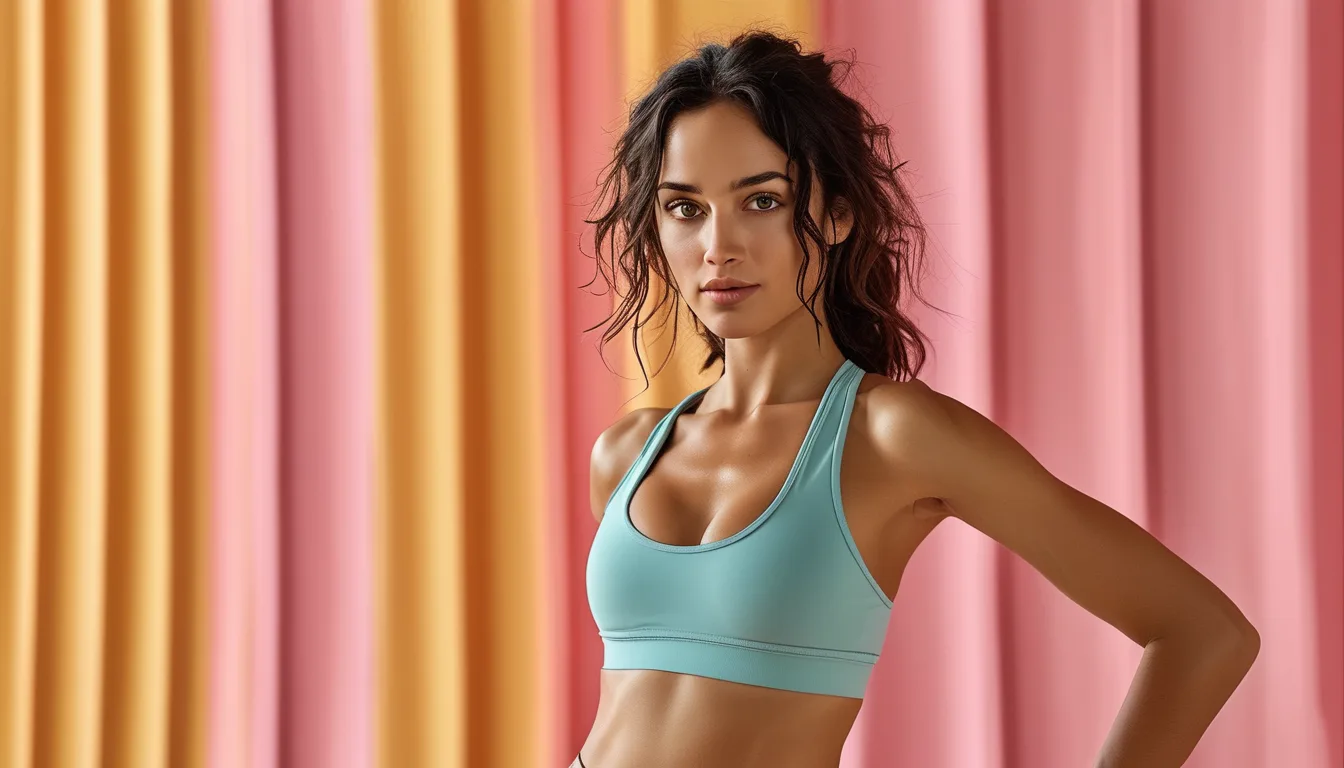
Seen here: UPF 50+ Racerback Yoga Tank Top — shop it on bubblelime.com
Keep Reading
This article is for general informational and styling purposes only. Fit, sizing, and product availability may vary.