The Smell That Comes Back the Moment You Sweat
Quick Answer: Odour that returns when you sweat is caused by bacteria and body oils trapped deep in synthetic fibres, plus detergent residue that shelters them. Fix it with a cold soak in white vinegar or an enzyme cleaner, then wash with a small amount of detergent and no fabric softener. Washing hotter or using more detergent makes it worse.
It is one of the more baffling laundry problems. The garment comes out of the machine smelling of nothing at all, and then twenty minutes into a session it smells like it did before you washed it.

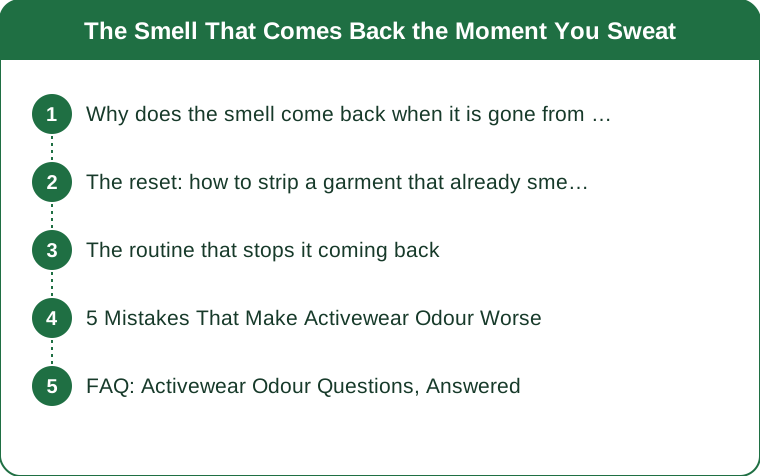
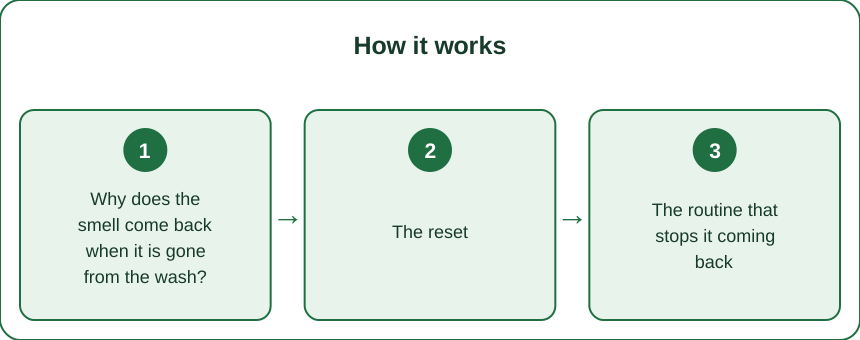
Why does the smell come back when it is gone from the wash?
Because you removed the surface odour without removing what causes it.
The actual source is bacteria plus body oil, both lodged inside the fibre structure. Synthetic fibres - polyester, nylon, elastane - are oleophilic, meaning they attract and hold oils. Sebum from your skin migrates into the fibre and stays there. Bacteria feed on it, and the compounds they produce are what you smell.
Ordinary washing removes what is on the surface and does not reliably reach what is inside the fibre. The garment smells clean because the surface is clean, and the deeper deposit is untouched.
Then you sweat. Moisture and warmth reactivate the bacteria still present, they resume metabolising the oils still present, and the odour returns within minutes.
Why this affects synthetics far more than cotton: cotton absorbs water and releases oils comparatively well. Polyester repels water and holds oil, which is exactly what makes it good at wicking sweat away and bad at letting go of what the sweat carries.
Why bra tops are the worst offenders in any wardrobe:
- Highest skin contact of any garment, over the largest area of dense sweat gland distribution
- Thick construction - moulded cups, padding, and multiple layers hold moisture and are slow to dry
- High elastane content for support, and elastane holds oil particularly well
- Warm, enclosed, and often left damp in a bag after training
Three things make it worse and are all common:
- Too much detergent, which does not rinse out of technical fabric and leaves a residue that traps bacteria
- Fabric softener, which coats fibres in a waxy layer that seals odour in and destroys wicking
- Leaving damp gear balled up for hours, which is a bacterial incubator
The reset: how to strip a garment that already smells
This is a one-off deep treatment. Do it once per garment, then change your routine so it does not recur.
Method 1: The vinegar soak - cheapest and works for most cases
- Half a cup of white vinegar in a basin of cold water
- Submerge fully and soak 30 to 60 minutes. Longer for bad cases, up to a few hours.
- Wash cold afterwards with a small amount of detergent
- Air dry completely
The acid neutralises alkaline odour compounds and helps break down residue. The vinegar smell rinses out entirely.
Method 2: Enzyme cleaner - the most effective for oil-based odour
Enzyme detergents contain lipases and proteases that break down oils and proteins rather than lifting them away.
- Soak in cold water with an enzyme sports detergent for 1 to 2 hours, or per the label
- Cold water only. Hot water denatures the enzymes and stops them working - this is the most common error.
- Then wash normally
Method 3: Oxygen bleach - for stubborn, long-established cases
- Oxygen bleach (sodium percarbonate), not chlorine bleach - chlorine destroys elastane
- Warm water, per label, soak 1 to 6 hours
- Check the care label first, and test on a hidden area for anything coloured
What not to do:
- Do not combine vinegar and bleach of any kind - the combination can produce harmful gas
- Do not use hot water on elastane. It degrades the fibre, and a stretched-out bra top is a worse outcome than a smelly one.
- Do not double the detergent. Residue is part of the problem, not the solution.
- Do not tumble dry until you are certain the smell is gone - heat sets it permanently

The routine that stops it coming back
Immediately after wearing:
- Take it off and hang it to dry rather than leaving it in a bag. Bacteria multiply fastest in a warm damp pile, and the difference between hanging it and bagging it is enormous.
- If you cannot wash promptly, rinse in cold water and hang. A thirty-second rinse removes most of the sweat before it can be metabolised.
- Never leave it in the car. Warm and damp is the worst combination for both odour and elastane.
Washing:
- Cold water, 30C or below
- Half the detergent you think you need. Technical fabrics need far less than the bottle suggests, and excess does not rinse out.
- No fabric softener, ever
- Turn inside out so the skin-contact surface faces the water
- Mesh bag to protect hooks, clasps, and straps
- Wash with other activewear, not with towels or cotton, which shed lint into technical fabric
- An extra rinse cycle if your machine has one - it removes residue that the main cycle leaves behind
Drying:
- Air dry, in shade, ideally outdoors. UV has a mild antibacterial effect, though direct sun degrades elastane over time - dappled shade or indoors near a window is the balance.
- Never tumble dry. Heat sets odour and destroys stretch.
- Dry completely before storing. Slightly damp storage restarts the whole cycle.
Rotation and lifespan:
- Own at least three and rotate. Elastane needs about 24 hours to recover, and full drying between wears matters as much.
- A monthly vinegar soak as maintenance on your most-used pieces prevents build-up entirely
- Padded cups need removing and washing separately where possible - they hold moisture longest and are frequently the actual source
5 Mistakes That Make Activewear Odour Worse
1. Using more detergent. The instinct is understandable and it is exactly backwards. Excess detergent leaves a residue in technical fabric that holds bacteria and oils. Use half the recommended amount and add an extra rinse.
2. Using fabric softener. It coats synthetic fibres with a waxy layer that traps odour underneath and destroys the wicking that the fabric was engineered for. There is no scenario in which it belongs in an activewear wash. Dryer sheets do the same thing.
3. Washing hot to kill bacteria. Hot water at domestic temperatures does not reliably eliminate the deep-set oils, and it does reliably degrade elastane. You end up with a stretched-out garment that still smells.
4. Leaving it in the gym bag. The single biggest behavioural contributor. A few hours in a warm bag lets bacterial populations grow enormously, and each cycle deposits more into the fibre. Hang it up the moment you get home, even if you cannot wash it for days.
5. Masking with scented products. Scented detergent, scented sprays, and perfumed boosters add fragrance on top of the odour compounds without removing them. The result is a distinctive and worse smell once you sweat, and the added residue makes the underlying problem harder to shift.
The bonus mistake: applying deodorant, body lotion, or sunscreen immediately before dressing. Aluminium-based antiperspirants in particular react with fabric and cause both staining and odour retention. Let products absorb for a few minutes, and pay attention to the underarm and band areas when treating a garment - they are usually where the problem is concentrated.
FAQ: Activewear Odour Questions, Answered
Does vinegar damage elastane?
No, in the dilutions used for laundry. Cold water with half a cup of white vinegar is safe for regular use. Avoid undiluted vinegar sitting on fabric for long periods, and never combine it with bleach.
Why do only some of my clothes have this problem?
Fibre content and construction. High-polyester and high-elastane garments hold oil most; cotton and merino wool release it far better. Thick padded pieces hold moisture longest, which is why bra tops and thick leggings are usually the worst.
Can I use baking soda instead?
Baking soda helps with acidic odours and is mildly abrasive, and it is less effective than vinegar or enzymes for the oil-based odour typical of activewear. Do not use both at once - they neutralise each other.
Is the smell a hygiene problem?
It is bacteria feeding on skin oils, which is normal rather than unsanitary. It is not usually a health concern. Persistent skin irritation, rash, or itching under a bra top is a different matter and worth a professional opinion.
At what point should I just replace it?
If a full enzyme or oxygen soak does not fix it, the fabric is likely saturated and permanently affected. That usually coincides with a garment that has lost elasticity anyway - most bra tops have a functional life of roughly 30 to 50 wears of hard use.
TL;DR:
- Odour returns because oils and bacteria are lodged inside synthetic fibres, not on the surface
- Reset with a cold vinegar or enzyme soak - enzymes need cold water or they stop working
- Use half the detergent, never fabric softener, cold wash, air dry, add an extra rinse
- Hang gear to dry the moment you get home rather than leaving it in a bag
- Remove and wash padded cups separately - they are often the actual source
The fix is one deep soak followed by a slightly different routine, and the routine is less work than what most people are already doing. Start with the vinegar soak on your worst offender tonight and you will know by the next session whether it worked.
See It in Motion
Seen here: Racerback Tank Top - White — shop similar styles on bubblelime.com
Keep Reading
This article is for general informational and styling purposes only. Fit, sizing, and product availability may vary.