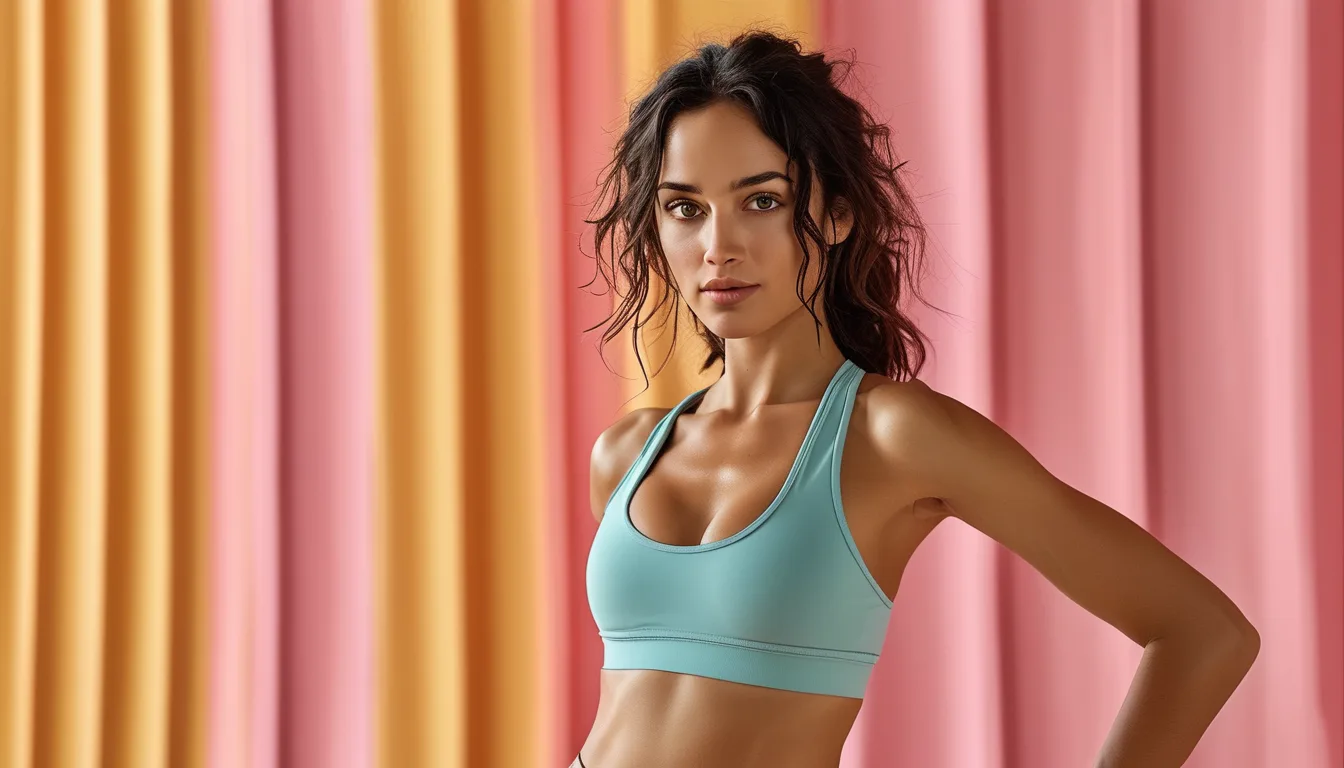
Bra Top Sizing: Why Your Usual Size Runs Different
Quick Answer: Bra tops are usually sized by band/torso measurement (S/M/L) rather than traditional band-and-cup sizing, so a fitted bra size like 34B doesn’t map directly — checking the brand’s specific size chart by measurement is more reliable than converting from your regular bra size.
It’s a reasonable assumption that a 34B bra size should translate to a predictable bra top size, but most bra tops use a completely different sizing system that doesn’t carry over the way people expect.
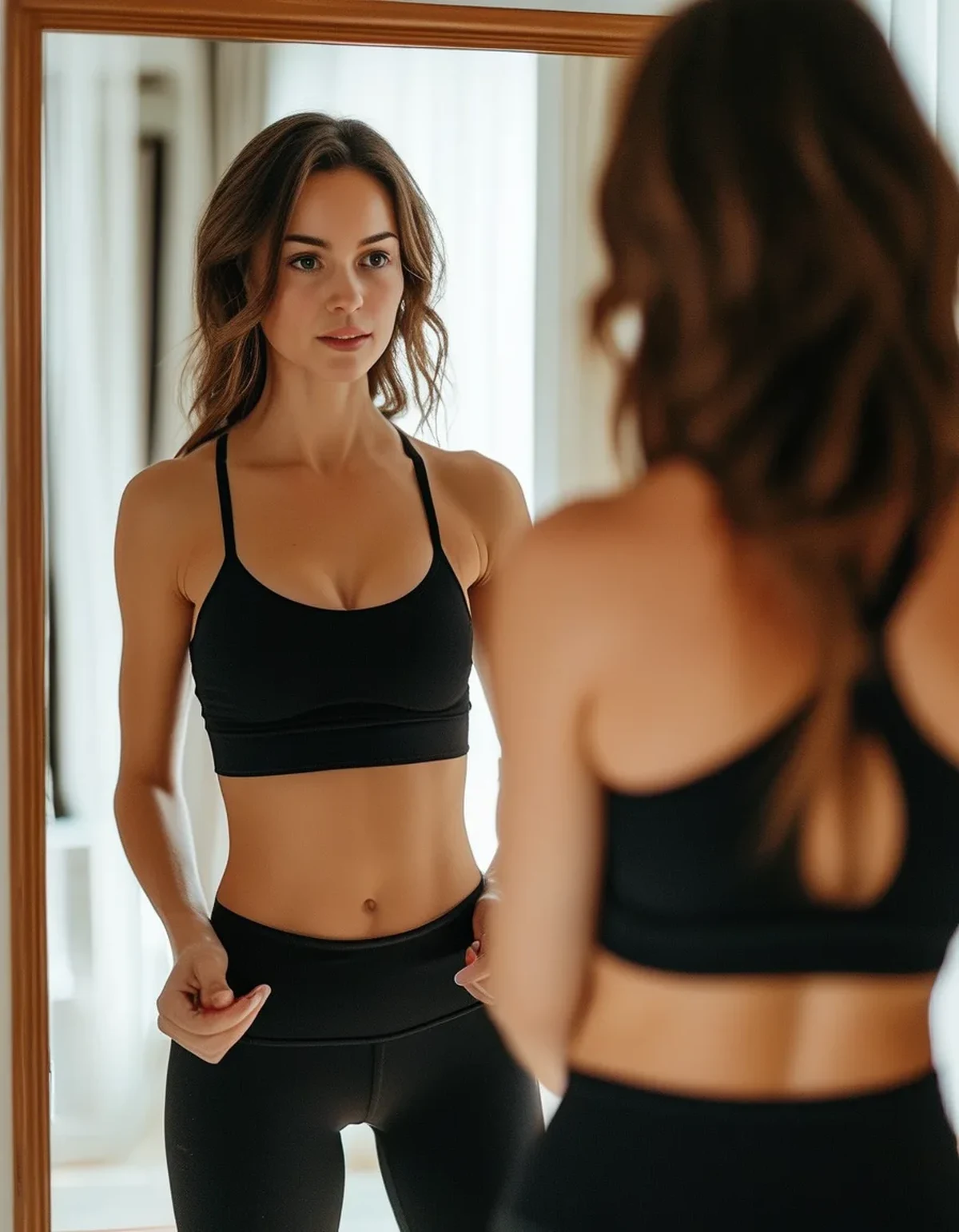
Why do bra tops use a different sizing system at all?
Bra tops are built more like a compression garment than a structured bra — they rely on stretch fabric and band tension across a size range, rather than individual cup sizing, so the S/M/L system reflects torso and bust circumference more broadly rather than a specific cup volume.
How should you actually determine your bra top size?
Measure your underbust and full bust in inches, then check that specific brand’s size chart rather than assuming your regular bra size translates. Because there’s no cup sizing, a fuller bust and a smaller band combination (common in bra sizes like 32D) can fall into a size range that feels different than expected — measurement-based sizing catches this, guessing from regular bra size doesn’t.

What Nobody Tells You About Bra Top Fit
Compression level varies more between bra top brands than between bra brands. Two bra tops labeled the same size (M, for instance) from different brands can have meaningfully different support levels, since “compression” isn’t a standardized measurement the way band and cup sizing loosely is — checking reviews or a size guide’s support-level notes matters more here than with traditional bras.
Does bust size limit which bra tops actually work well?
Bra tops generally offer less individualized support than a structured sports bra, so fuller busts (typically D+ cup equivalent) often get better support from a traditional structured sports bra for higher-impact activity, reserving bra tops for lower-impact wear or smaller busts where compression alone is sufficient.
FAQ: Bra Top Sizing Questions, Answered
Should I size up or down if I’m between bra top sizes?
Sizing up is usually safer for support and comfort; sizing down can work if you specifically want more compression, but check the brand’s fabric stretch notes first.
Do bra tops work for high-impact workouts?
Some do, but check the brand’s support-level rating specifically — many bra tops are designed more for low-to-moderate impact activity.
How do I know if a bra top is actually supportive enough for me?
A quick jumping-jack test in the fitting room or at home (within return policy) is a practical, low-cost way to check before committing to a size or brand.
TL;DR:
- Bra tops use torso/bust measurement sizing (S/M/L), not traditional cup sizing
- Measure underbust and full bust rather than converting from your regular bra size
- Compression level varies significantly between brands at the same labeled size
- Fuller busts often get better support from a structured sports bra for high-impact activity
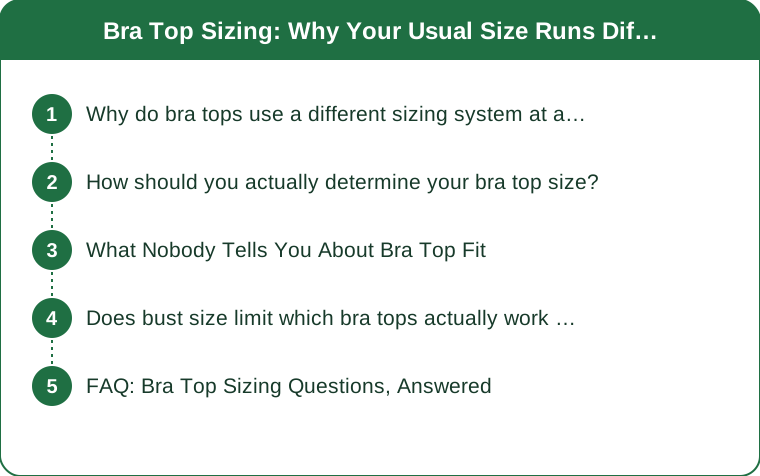
See It in Motion
Seen here: Racerback Tank Top - White — shop similar styles on bubblelime.com
Keep Reading
This article is for general informational and styling purposes only. Fit, sizing, and product availability may vary.