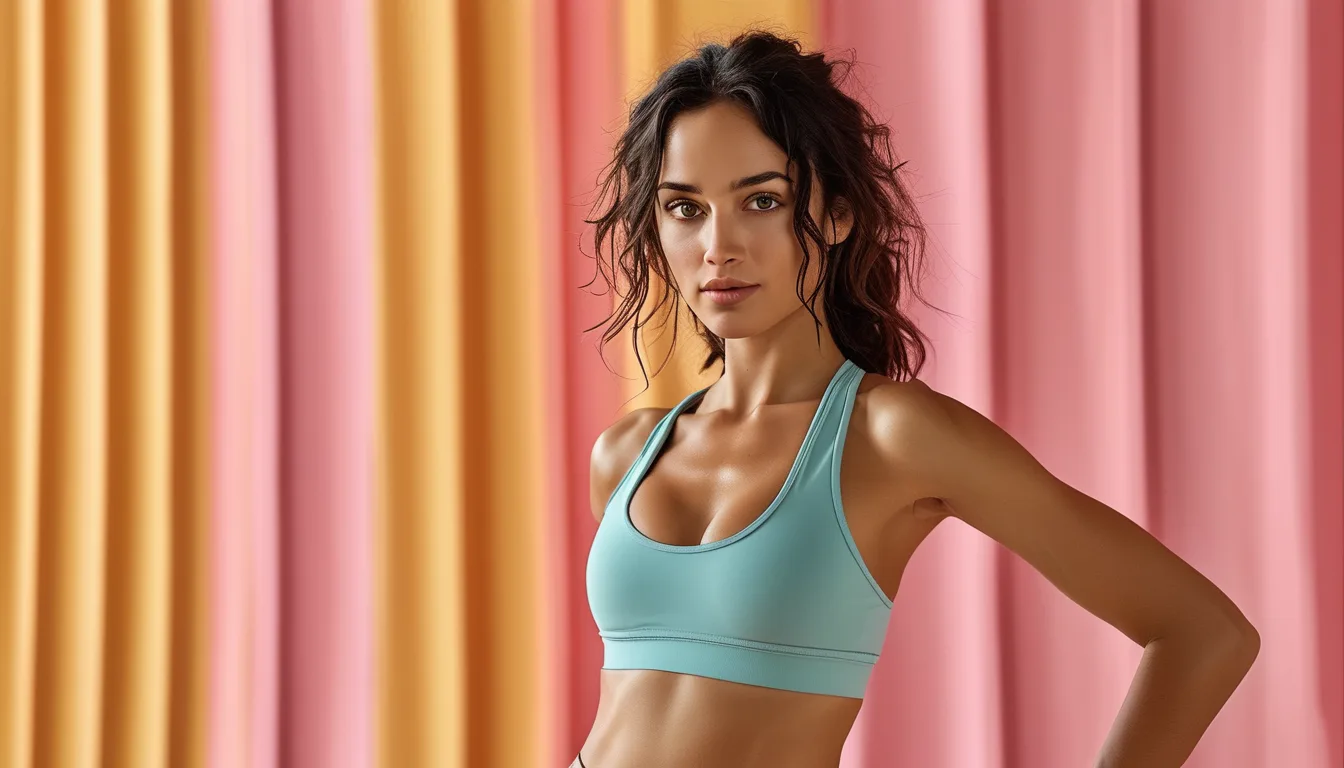
Longline vs Regular Bra Tops: The Coverage Question, Settled
Quick Answer: A longline bra top extends the band two to four inches down the ribcage, which spreads pressure over more skin, doubles as a crop top, and adds mid-torso coverage confidence. What it does not automatically add is support - that still comes from band snugness, cup structure, and straps, exactly as in a regular bra. Choose longline for low-to-medium impact, layering, and band-dig relief; choose regular for high impact, hot sessions, and shorter torsos where the extra length has nowhere to go.
The longline silhouette has quietly become the default on studio floors, and most buyers pick it on looks alone - then judge the category on a mismatch. It deserves a fairer briefing, because the extra fabric changes four real things and leaves one crucial thing completely unchanged.
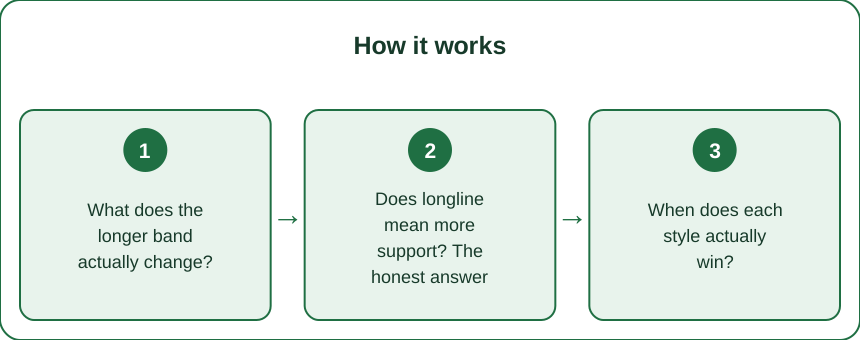
What does the longer band actually change?
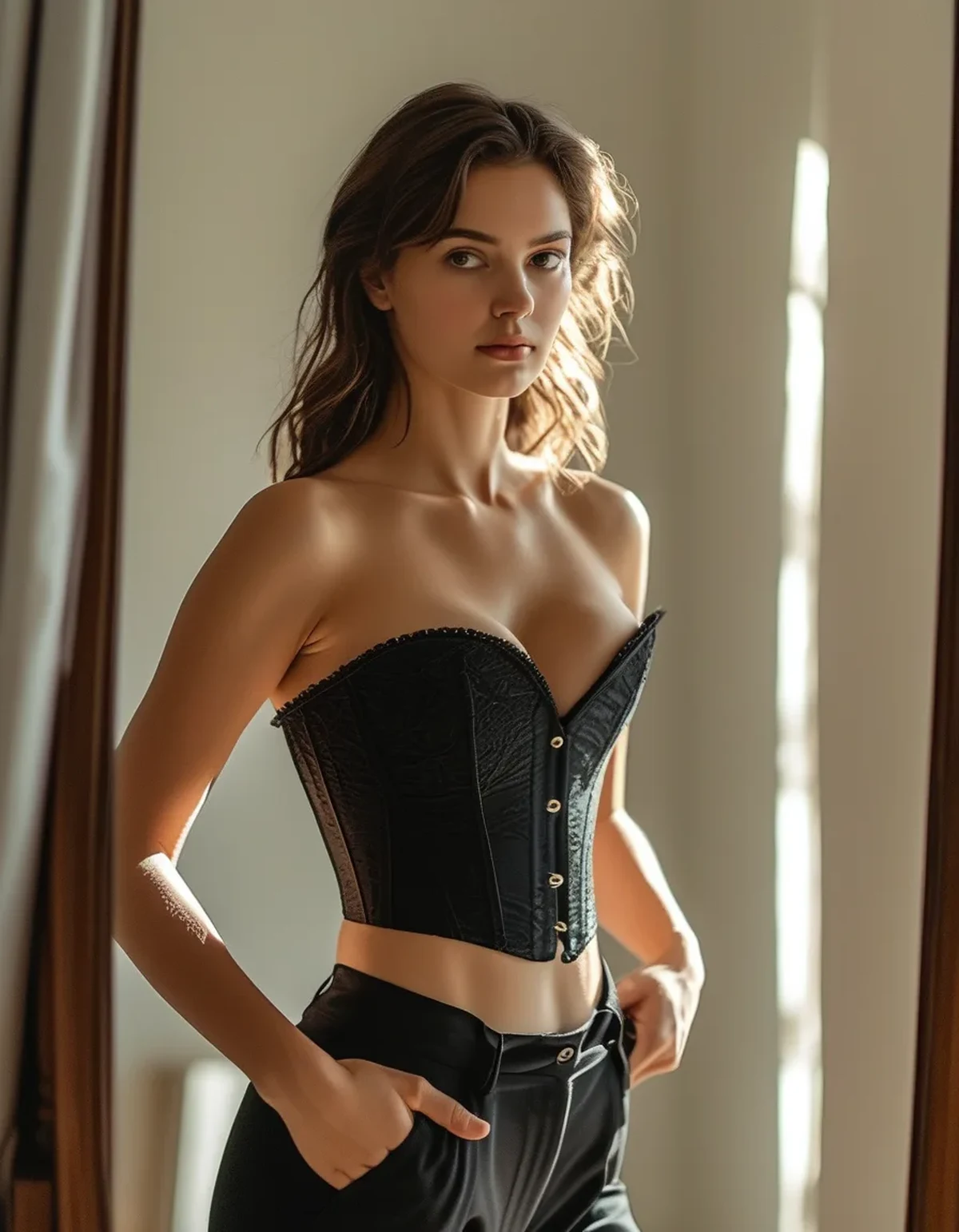
Pressure distribution, first and most physically. A regular bra concentrates its grip on a strip of skin an inch or two tall. A longline spreads a similar total hold across double or triple that area, so the pounds-per-inch on any one spot drop. For everyone whose complaint is the band groove - the red stripe under the bust after class, the digging along the underwire line - this redistribution is the entire pitch, and it genuinely delivers. Same hold, wider footprint, no trench.
Coverage, second. The extra inches cover the lower ribs and often meet a high waistband, which turns bra-top-as-top from a bold move into a neutral one. Paired with high-waisted leggings, a longline reads as an outfit rather than underwear having an adventure - the sliver-of-midriff or full-coverage call becomes a styling choice you control by waistband height.
Stability of position, third. More band length means more contact, which means the top rides up less during overhead work and inversions - the arms-up test in the fitting room shows this instantly.
And smoothing, fourth, for those who want it: the longer band bridges the spot where a regular band can create a step. What it costs: more fabric equals more warmth and slower drying, and on short torsos the hem can collide with the waistband and fold - the one fit geometry where longline fights the body instead of helping it.
Does longline mean more support? The honest answer
No - and this is the misunderstanding that generates most longline disappointment. Support comes from the same three sources it always has: a band snug enough to anchor on the ribcage, cup or compression structure that controls movement, and straps that fine-tune. Band length is a comfort and coverage feature layered on top of that system, not a fourth pillar.
The market makes this confusing because so many longline styles are light-support by design - pretty strappy backs, thin removable pads, gentle compression. The silhouette got associated with the support level of the products wearing it. But a longline with a firm underband and structured cups supports like the serious bra it is, and a flimsy regular bra supports like the flimsy bra it is. Judge the engineering, not the hemline.
The checks translate directly: the band - the part at your underbust, wherever the hem ends - should be snug enough to stay level when you raise both arms, and should sit horizontal around your body, not riding toward your shoulder blades. Do ten jumping jacks in the fitting room; the top should move with you, not separately, and the hem should not migrate into a roll.
One genuine support-adjacent advantage: because the load spreads wider, some women can comfortably wear the correctly snug band they always needed but found too intense as a narrow strip. Longline does not add support - but it can make real support tolerable, which lands in the same place.
When does each style actually win?
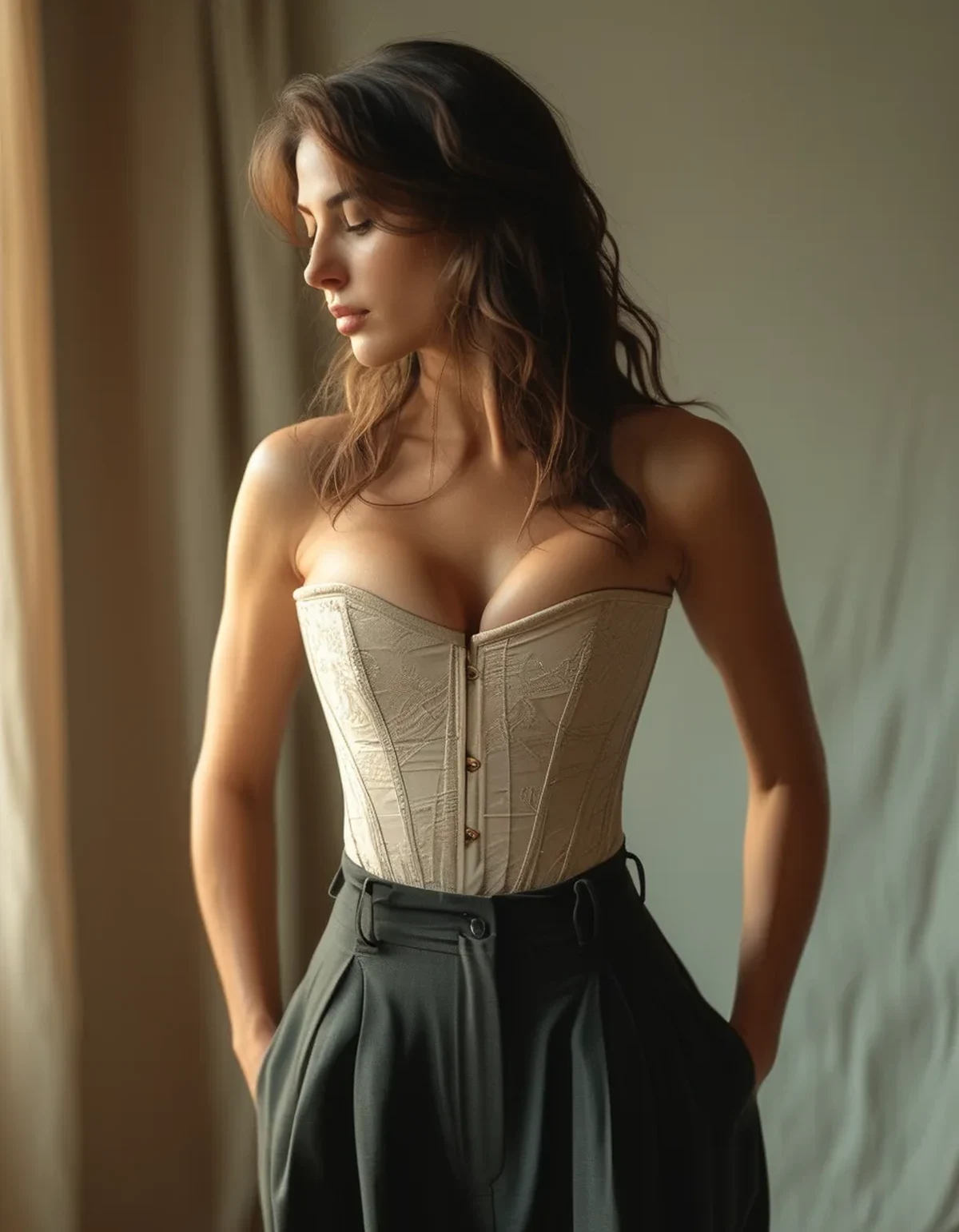
Longline wins:
- Low and medium impact as the main event - yoga, pilates, barre, lifting, walking - where its comfort and looks run unopposed.
- Bra-top-as-outfit days. With high-waisted leggings or flare yoga pants, the longline crop is the cleanest one-two in current activewear; errands and coffee after class require no third layer in August.
- Band-dig sufferers, as above - the redistribution is the fix.
- Layering seasons ahead: under an open shirt or a cropped sweater, the longline reads as intentional first layer, which earns it a fall on the hanger, not just a summer.
Regular wins:
- High impact. Running and jump-heavy sessions need maximum structure per ounce, and the engineering budget in serious high-impact bras lives overwhelmingly in regular-band designs with molded cups and real closures.
- Hot, soaked sessions. Hot yoga and August intervals punish extra fabric - more coverage is more wet weight and slower drying.
- Short torsos, where the longline hem and the waistband fight for the same real estate and the fold always wins.
- Under fitted tops, where the longline’s hem edge prints a visible line a smooth regular band does not.
The realistic drawer is a portfolio: two or three longlines for studio-and-street days, one or two structured regulars for the fast and sweaty ones.
5 Mistakes Everyone Makes Buying Longline Bra Tops
1. Buying longline as a support upgrade. The length is comfort and coverage; support is band, cups, straps. Read the product’s stated impact level and the construction, not the silhouette.
2. Sizing up for a gentler feel. A loose longline abandons its job everywhere at once - support gone, ride-up back, smoothing turned to gaping. If the correct size feels intense, the style runs firm or the cut is wrong for you; the fix is a different model, never a bigger band.
3. Ignoring torso length. The hem must land clear of your waistband sitting down, not just standing in the mirror. Sit, hinge, and squat in the fitting room; a hem that buckles against the waistband will do it every single wear.
4. Testing on the easy day. The first wear of a new longline should not be the 90-minute hot class. Break it in on a moderate session where a misjudged fit is an annoyance, not the story of the day.
5. Retiring it from consideration after one bad model. The category spans flimsy strappy things and seriously engineered pieces. One stretched-out disappointment describes that product, not the hemline.
FAQ: Longline Bra Top Questions, Answered
Are longline bra tops supportive enough to work out in?
For low and medium impact, many are - provided the band is snug and the structure is real. For running and jump work, choose by stated impact rating and construction, where regular-band designs still dominate.
Why does my longline bra top roll up at the hem?
Usually a size too big, a torso too short for that hem length, or a waistband occupying the same territory. Snugger size, shorter longline, or lower-rise bottoms - in that order of likelihood.
Can I wear a longline bra top as a shirt?
That is half the category’s purpose: with high-waisted bottoms it reads as a deliberate crop outfit for class, errands, and warm days. Coverage level is set by the waistband gap you choose.
Is longline better for band digging and red marks?
Generally yes - spreading the hold over a wider band area is the direct mechanical fix for the underbust groove, and it is the single best reason to try the style.
TL;DR:
- Longline spreads band pressure wider - the real fix for the underbust groove - and adds coverage, stability, and crop-top duty.
- It does not add support: band snugness, cup structure, and straps still decide that, whatever the hemline.
- Pick longline for studio days, layering, and bra-top outfits with high-waisted leggings; pick regular for high impact, hot sessions, and short torsos.
- Fit-check by sitting and raising arms: the hem must clear the waistband and the band must stay level.
The longline is neither a gimmick nor an upgrade - it is a different distribution of the same physics, brilliant in its lane. Buy the engineering first, the hemline second, and both lengths earn their drawer space.
See It in Motion
Seen here: High Waist Yoga Leggings with Inner Pocket — shop it on bubblelime.com
Keep Reading
This article is for general informational and styling purposes only. Fit, sizing, and product availability may vary.